

We are spiritual, infinite beings incarnated into a physical, finite vehicle to have experiences in a relative context of duality that cannot be had in the absolute, non-dual realm. Hence, we must have one foot in the physical world and the other in the non-physical to get the best of both worlds. Our localized, biological bodies belong to the physical realm while our non-localized, ethereal minds or consciousness pertain to the non-physical.
To create a holistic experience of our brief journey here and balance out extremes, material seekers must add more meaning into their lives and spiritual seekers must avoid the meaning trap. This piece is to help seekers, teachers, learners on the spiritual path recognize the shadow side of meaning-seeking. The capacity to hold a dichotomy and play with it is an art, and one mustn’t shy away from it in order to comprehend life from myriad angles.
How seekers get lost in the search
You know the feeling. It’s late at night, and your mind won’t stop replaying that seemingly insignificant moment from days ago. The synchronicity that felt too perfect to be random. The recurring image in your dreams. The book that somehow appeared exactly when you needed it most. Your chest constricts not with anxiety, but with something else entirely—the weight of unanswered significance pressing against your ribcage, demanding interpretation. If this sounds familiar, you’re not alone. Millions of spiritual seekers find themselves caught in what I call the meaning trap—a psychological pattern where the noble search for purpose becomes an exhausting compulsion that paradoxically distances us from the very wholeness we seek. This isn’t about dismissing genuine spiritual insight or the legitimate human need for meaning. Rather, it’s about understanding why that need can transform into a prison and how to navigate the path toward authentic integration.
The hunger behind your search
When you say you’re hungry for meaning, you probably think you’re describing one unified desire. In reality, you’re experiencing different psychological needs that often get merged, leading to chronic dissatisfaction no matter how much inner work you do. Understanding this distinction changes everything about how you approach your spiritual journey.

The coherence hunger: The need for your life to make sense as a cohesive narrative manifests as that desperate drive to connect disparate experiences into an understandable story. When you obsessively journal about past relationships trying to identify the pattern, or when you feel fragmented because the person you were eight years ago seems incompatible with who you’ve become, you’re experiencing coherence hunger. Your psyche cannot tolerate contradiction without attempting resolution. This isn’t neurotic over-analysis; it’s your mind’s built-in drive toward integration. The sensations accompanying this hunger may surface as scattered mental fragments demanding to be assembled, the compulsion to understand before you can rest, and the likes.
The purpose hunger: This is the directional pull asking, “What am I moving toward?” Unlike coherence which looks backward to make sense of what was, purpose looks forward with restless anticipation. Research indicates that those who actively search for meaning often report lower life satisfaction than those who allow meaning to emerge naturally through engaged living. This hunger manifests as an inability to settle; you’re not just seeking goals, you’re responding to the human drive toward becoming something you aren’t yet. This explains why you can’t do work that feels arbitrary, why simply paying bills feels like spiritual death, why every action needs to connect to some larger trajectory.
The significance hunger: The question lingers whether any of it actually matters. You can have perfect coherence (your story makes complete sense) and clear purpose (you know exactly where you’re headed) and yet feel an echoing hollowness. This is the absence of what philosophers call the numinous—the sacred quality that makes existence feel worthy. Post-traumatic growth research shows that transformation often includes enhanced appreciation of life and identification of new paths, speaking to humanity’s need for experiences that feel inherently valuable. Significance hunger shows up as the rejection of ordinary life, the need for experiences to transcend the mundane, the subtle but persistent feeling that you’re performing existence rather than truly living it.
Here’s where most seekers go haywire: they try to satisfy all the above hungers with the same approach. You use journaling and therapy to try to generate purpose. You chase achievements and career milestones hoping they’ll create significance. You fill your schedule with spiritual practices thinking busyness will manufacture coherence. But these hungers are distinct, and the psyche knows precisely what it needs. Feeding it the wrong food, no matter how much you consume, will leave you perpetually starving.
The shadow side of meaning-seeking
Every spiritual seeker needs to hear this uncomfortable truth: alongside your genuine quest for growth runs a darker current that most people refuse to acknowledge. Your meaning-making isn’t purely about evolution and awakening. It’s also about control, specialness, and avoidance. This is what depth psychology calls the shadow—everything you’ve rejected about yourself because it contradicts your self-image as someone conscious and aware.

The subtle pride when you perceive a pattern others miss, that quiet sense of superiority, the unspoken thought, “I see what they don’t”—you’re not just seeking truth; you’re seeking confirmation of your exceptional nature. This isn’t conscious manipulation; it’s an automatic compensation for a deeper terror of insignificance. When you start identifying as “the seeker” rather than simply seeking, you’ve crossed into dangerous territory already. The quest becomes performance, enlightenment becomes a costume you wear, and you stop actually growing because you’re too busy demonstrating how awakened you are.
The term “spiritual bypassing” describes how people use spiritual concepts and practices to avoid dealing with unresolved emotional wounds. Watch how much of your meaning-making actually functions as elaborate avoidance. You analyze the synchronicity instead of getting things done. You journal endlessly about your soul’s calling while neglecting the difficult conversation sitting right in front of you. The cosmic quest conveniently absolves you from showing up for mundane responsibilities, from being present in relationships that don’t feel “destined”, from doing work that doesn’t align with your imagined higher purpose.
Then there’s the projection trap—the tendency to turn every event or person into a symbol in your personal mythology. Within minutes of meeting someone, you’ve assigned them an archetypal role: the mentor figure, the shadow adversary, the soul connection. But you’re not actually seeing them; you’re seeing what they represent in your narrative. This reduces complex human beings to meaning-delivery systems for your journey. When shadow work is neglected, practitioners often exhibit hypocrisy, self-deception, and unconscious projection of rejected aspects onto others.

Analysis paralysis: What is the cruelest consequence of this unacknowledged shadow? Your relationships erode because people tire of being analyzed rather than met. Your body disappears because you live entirely in interpretive consciousness, disconnected from physical reality. And paradoxically, you analyze instead of acting, spending so much energy decoding what the universe is telling you that you never actually move; the quest for meaning becomes paralysis dressed in spiritual clothing.
What’s actually broken?
The compulsions, the shadow behaviors, the insatiable hunger—these aren’t the root issue. They’re symptoms pointing to something structural that’s been damaged. There’s a connecting line within you, what Jungian psychology calls the ego-Self axis, and when it breaks, everything falls apart. The ego is your conscious identity, the part of you that makes decisions and navigates daily life. But the Self (capital S) is something different; it’s the organizing intelligence of your entire psyche, the blueprint for who you could become, the totality of your psychological potential. When these two are connected, you feel held by something larger than yourself. Life has inherent meaning without you having to hunt for it. Purpose flows naturally because you trust the underlying pattern unfolding through your experiences.

When this axis is damaged, you experience what’s called meaning anxiety—not general worry, but a specific existential panic that nothing connects to anything, that you’re adrift in a random universe where your biography is just a series of meaningless accidents. You know this feeling intimately: it’s 3:00 am when your entire life story suddenly collapses into incoherence and beneath it you find only void, only noise, only matter colliding without purpose. Your compulsive meaning-making is actually an attempt to repair this broken axis. Every synchronicity you notice, every pattern you detect, every symbolic interpretation represents the ego desperately trying to re-establish contact with the Self. You’re not overthinking; you’re scaffolding, building temporary bridges across a chasm that feels unbearable in its emptiness.
But here’s the critical insight that changes everything: you cannot repair this axis through ego effort alone. It’s structurally impossible. The ego is one end of the axis; it cannot reach across the gap and grab the other end. It’s like trying to lift yourself by your own collar. This is why more analysis doesn’t satisfy, why achievement feels hollow, why you keep searching even after you’ve “figured it out”. You’re using the tool that’s broken to fix somethig. But what damages this axis in the first place?
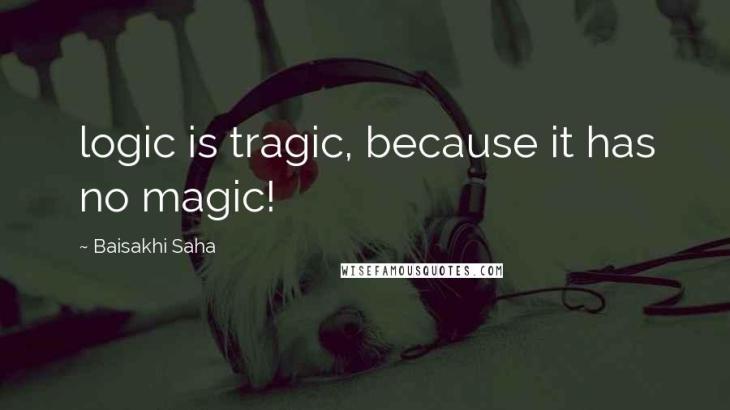
For many seekers, trauma shattered it—the moment when your innocent trust in reality broke, severing your connection to feeling held by something larger. Over-rationalization also damages the axis, when you kill the sacred and magical with logic and reduce everything to mechanism until you’ve cut yourself off from the symbolic language the Self speaks. Cultural wounding worsens this damage through collective traumas and inherited shame that bend your trajectory away from authentic individuation and toward society’s expectation. And the relentless pressure to build an acceptable persona at the expense of soul progressively weakens the connection until the axis finally breaks.
When breaking becomes opening
For many spiritual seekers, the meaning quest didn’t begin with curiosity or philosophical interest. It began with great damage—a loss so profound, a betrayal so complete, a collapse so total that the person you were before simply ceased to exist. In that breaking, something else began: the compulsive need to understand why, to extract purpose from devastation, to find the meaning that makes unbearable pain endurable. This is trauma functioning as potential initiation and it is essential to understand the distinction. Contemporary psychology often treats trauma solely as damage requiring recovery. But depth psychology recognizes that trauma, while genuinely devastating, can also force a reorganization of the psyche around a deeper center. The innocent ego—the part of you that trusted reality and believed in fairness—gets shattered, and in that destruction, you’re pushed toward integration the ego could never achieve on its own.

Research on post-traumatic growth demonstrates that people who endure intense psychological turmoil often emerge more spiritual and altruistic, with transformed relationships to meaning and purpose. Before the trauma, you could stay superficial but after, something inside refuses to allow it. You’re pulled inward, forced to ask questions you previously avoided: “Who am I beneath my roles? What holds when everything breaks? What matters when nothing matters?” But trauma doesn’t just destroy—it also protects, and this creates a complex dynamic. When pain threatens to destroy your core, automatic psychological defenses arise. These protector parts dissociate you from the unbearable, building walls around the traumatized spirit to keep it safe, frozen, and innocent. The problem is that the same mechanism protecting you also imprisons you. It keeps you fragmented because integration means feeling the wound, and feeling it seems like dying!
So you do something else: you turn the trauma into a narrative, into an initiation story, “This happened for a reason. I was meant to go through this fire. It forged who I am”. And there’s genuine truth here—the wound can become an opening, the crisis can become a call. But look out for the shadow: the moment you identify as “the wounded one”, you’re stuck! Your entire identity becomes organized around what happened to you. You’re no longer healing; you’re performing healing. You’re not integrating; you’re broadcasting your integration journey for validation.

The archetype that emerges from this pattern is the wounded healer—the person who transforms pain into wisdom and uses experience to guide others through similar darkness. This is a legitimate and valuable role, but it has a trap: unconsciously resisting complete integration because healing fully would mean losing the identity you’ve built around being wounded. Your wound becomes your credential, your authority, your specialness, and complete recovery threatens all of it. True integration means you’re healed enough to help and wounded enough to understand, but you’re not collapsed into either state. You hold both the scar and the wisdom it produced without making either one your identity. The trauma did wake you up, but staying awake requires moving beyond endlessly analyzing what woke you and toward actual relationship with wholeness.
The shift: From hunting to recognizing
If you can’t think your way out and the ego can’t repair itself, what actually works? The fundamental shift required is from hunting to recognizing, from demanding that life explain itself to creating space for the psyche to speak in its own language. Hunting is the frantic energy you know too well: interrogating events, chasing synchronicities like a detective, analyzing dreams until they lose their power. It’s the desperate grasping of someone drowning. But recognizing is different: silent, receptive, reflective, creating space rather than filling it. This shift requires specific practices that change your relationship with the unconscious.

Active imagination is one of the most powerful but misunderstood techniques in depth psychology. This isn’t passive daydreaming or visualization; it’s direct ethical engagement with autonomous figures from your unconscious. You invite the part of you driving the meaning quest to step forward and speak. Not metaphorically. Actually. You ask directly, “What are you trying to show me? What do you need me to understand?” Then, critically, you listen without analyzing, without interpreting, without immediately making meaning. You let the figure speak, and often what emerges contradicts your expectations. The part you thought was your wise guide reveals itself as terrified. The protector reveals itself as a controller. The demon demanding meaning reveals that it’s trying to prevent you from feeling something unbearable.
Shadow work requires brutal honesty. What you condemn in another may be your own disowned aspect. The practice is simple but excruciating: notice what you judge in others, then ask not “do I do this?” but “where do I do this?” Because if it triggers you, you contain it. Every projection you withdraw returns energy to your actual growth instead of wasting it on judgment.
Dream work offers direct communication from the organizing intelligence of your psyche. Not through symbol interpretation, but through tracking patterns over time. What keeps recurring? What’s the emotional tone? What does the dream-ego do versus what you consciously do? Dreams aren’t cryptic messages requiring decoding—they’re mirrors showing you unconscious attitudes you’re carrying. When you pay consistent attention, the unconscious recognizes that the ego is listening and the communication becomes clearer.

Now, how to ground all of this in actual living? Instead of building identity around your quest, which becomes a prison, you work with values that guide behavior without collapsing into fixed identity. Not “I am a creative person on a mission” but “I value creativity”. Not “I am called to heal” but “I value service”. Viktor Frankl, who survived the Holocaust, advised against actively searching for meaning, suggesting instead that meaning emerges as a natural byproduct of pursuing meaningful activities. Small aligned actions matter infinitely more than grand symbolic gestures. You don’t need to quit everything to live meaningfully; you need to bring your values into what you’re already doing.
What integration actually looks like
So, what does success look like for someone wired this way? Not enlightenment. Not transcendence. Not arriving at a state where you’ve outgrown the need for meaning. Integration looks radically different from what most seekers imagine. You still sense patterns and synchronicities, but you don’t collapse your entire identity into being the person who sees signs. You allow interesting coincidences to remain interesting without building your self-concept around perceiving them. You find significance in your work and relationships without needing them to be cosmically ordained to matter. Washing dishes can carry meaning. A conversation with a stranger can feel sacred. You’re no longer measuring every experience against an imagined hierarchy of spiritual importance.

You hold coherence lightly, tolerating paradox and contradiction with more grace. Your life makes sense, but you’ve developed comfort with the chapters that refuse to resolve neatly. You can say, “I don’t know what that meant yet”, and leave it unresolved. The integrated seeker lives purposefully without needing a mission statement tattooed on their soul. Direction emerges from aligned action, not from decoding destiny. You do the next right thing and trust the larger pattern to reveal itself to the Self, which sees further than your ego can. Perhaps most importantly, you can let some events just be events. The flat tire is sometimes just a flat tire. Shit happens because we function in a reality of contrasts. Not everything is trying to tell you something. When you release the compulsion to extract meaning from every moment, you paradoxically become more available to genuine numinosity when it actually appears. Synchronicities still happen, but you notice them with gratitude rather than worshipping them as proof of cosmic favor.
Your tolerance for ambiguity increases dramatically. You can hold questions longer without collapsing into anxious analysis. The need for immediate answers loosens. You trust that understanding arrives when you’re ready to hold it. And meaning begins appearing in the ordinary texture of life itself: the weight of your tea mug, the rhythm of breath, the way afternoon light moves across a wall… You’re no longer so busy looking for significance that you miss the significance already present in everyday life. The quest doesn’t end. It transforms. From “what is life trying to tell me?” to “what wants to live through me?” From victim or chosen one to participant in an unfolding you don’t fully control or comprehend. You shift from demanding that the universe explain itself to allowing your life to be the explanation—not the answer, but the question being lived with increasing consciousness.
The price & promise of awareness
There’s a cost to this consciousness that must be named honestly. Once you’ve begun repairing the ego-Self axis, once you’ve tasted genuine connection between your small self and the larger organizing intelligence, you cannot unknow it. You become responsible for maintaining that relationship. Awareness brings obligation. But the weight lightens when it’s distributed properly—not carried alone by the struggling ego, but shared across the entire psyche. The ego still navigates, decides, and acts, but it does so in consultation with something larger, in dialogue with the Self. This is what integration actually means: not dissolving into the infinite, but standing in conscious relationship with it, firmly planted on earth while awake to the depths.
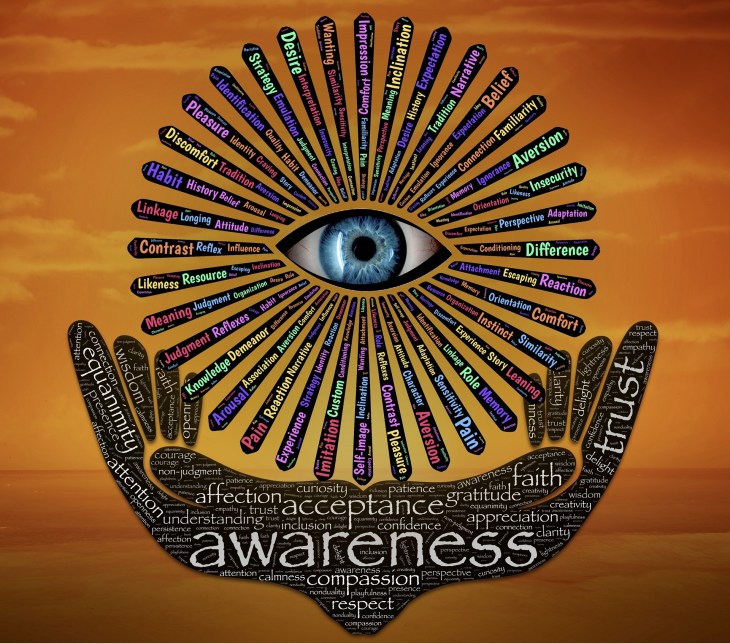
You don’t solve the need for meaning. You develop a mature relationship with the need itself. You learn its language, honor its function, allow it to guide you without letting it consume you. The meaning-maker who has integrated their shadow doesn’t stop seeking—they stop searching desperately, because signs are everywhere! They’ve learned to recognize what arrives naturally instead of chasing what forever recedes. In that shift from desperation to receptivity, from grasping to allowing, from hunting to recognizing, the axis repairs itself. Not perfectly. Not permanently. But enough. Enough to live with purpose. Enough to grow toward wholeness. Enough to continue the sacred work of becoming what you’ve always been, but couldn’t yet see clearly.
This work of consciousness is not easy. You are walking where most turn away—descending into the depths, meeting the shadow, and tending to what was broken without pretending it was never wounded. When the search for meaning becomes conscious, it becomes sacred. This is not about fixing yourself, but remembering. Your psyche knows what it is doing. The demand for coherence, purpose, and significance isn’t arbitrary neurosis—it’s functional intelligence pushing you toward integration. The work isn’t in the understanding but in the living. Your psyche will continue speaking through dreams, synchronicities, people who show up and losses that reshape you. The question is whether you can trust the process enough to stop demanding answers and start participating in the unfolding with consciousness, compassion, and courage.

Related search-terms: why do I need everything to have meaning, how to stop over-analyzing spiritual experiences, difference between coherence-purpose-significance, spiritual seeking without spiritual bypassing, repairing broken ego-Self connection, moving from hunting to recognizing meaning, integrating shadow in spiritual practice, post-traumatic growth in spiritual journey, meaning anxiety vs regular anxiety, practical spirituality without escapism.
Related reads: The heart language of synchronicity & symbolism, The unexpected aftermath of an awakening, The transformative power of shadow work, Delving deeper into shadow work, Parts integration for deep emotional healing, Breaking free from trauma’s invisible chains, The journey from wounded to healed empath, The jinx of meaninglessness in our societies, Are you doing conscious business or consuming with awareness?
#SpiritualPsychology #MeaningMaking #JungianPsychology #ShadowWork #SpiritualGrowth #DepthPsychology #ConsciousLiving #PostTraumaticGrowth #EgoSelfAxis #AuthenticSpirituality #SpiritualBypassing #IntegrativeHealing #WoundedHealer #Individuation #MindfulLiving #PsychologicalIntegration #SpiritualAwakening #InnerWork #SoulWork #TranspersonalPsychology
➡️ Key elements in this article:
- Navigating the Meaning Trap in Spirituality
- The Hunt for Meaning: A Spiritual Awakening Guide
- From Search to Recognition: Integration in Spiritual Growth
Discover more from evolving consciousness
Subscribe to get the latest posts sent to your email.


Loved reading this, very important to understand the difference
LikeLike